
Kitchen Basics
Complete Kitchen Sanitation Guide for the Home Cook
Learn how to properly sanitize your kitchen with food-safe bleach solutions, vinegar cleaners, hydrogen peroxide, and heat-based methods. This guide covers safe dilution ratios, how to disinfect cutting boards and knives, cross-contamination prevention, and essential safety warnings about mixing household cleaners. Keep a spotless, restaurant-level kitchen with proven sanitation techniques and step-by-step instructions.
By TheKnird · November 23, 2024 · 2 min read
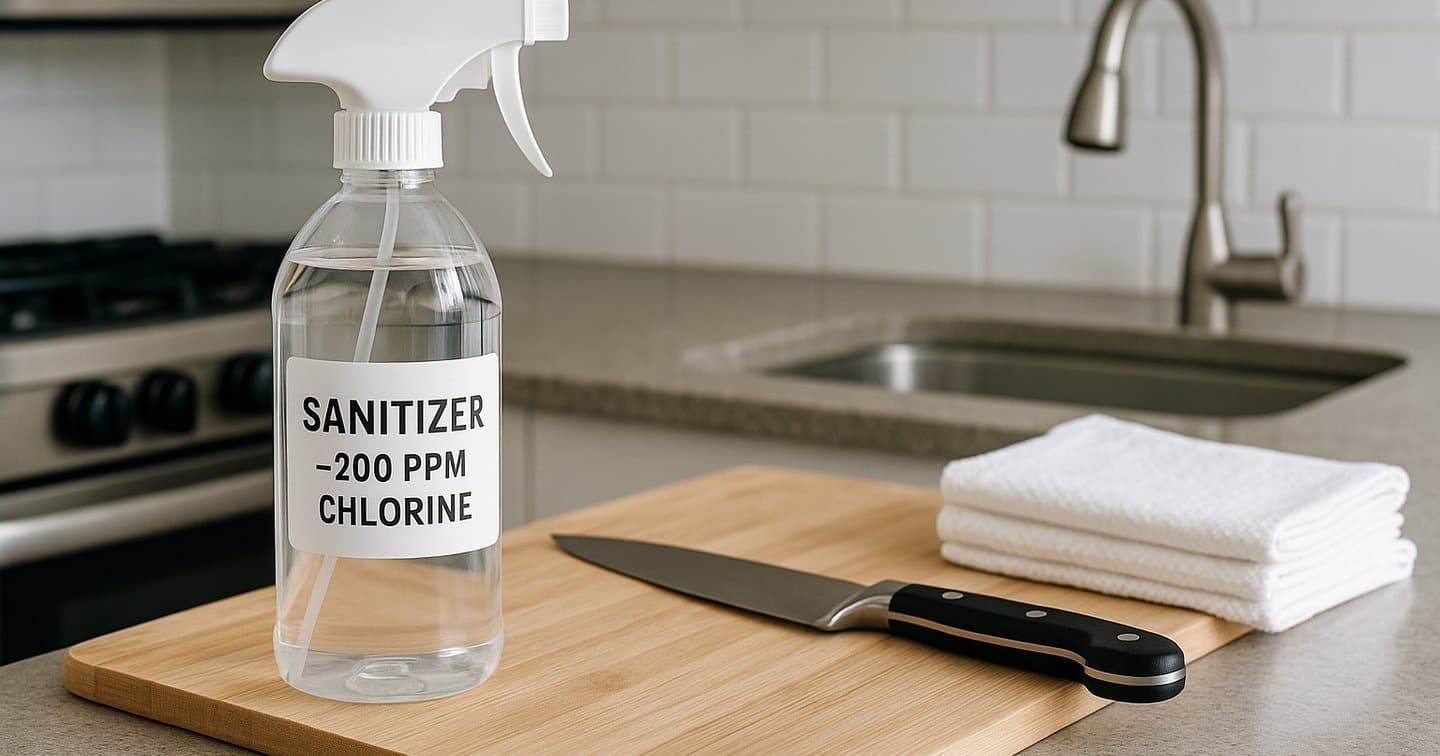
Keeping a kitchen truly clean goes beyond wiping down surfaces. Real sanitation protects your family from cross-contamination, foodborne illness, and harmful bacteria that can spread quickly during everyday cooking. Even a kitchen that looks spotless can harbor dangerous pathogens on cutting boards, knives, sinks, handles, and towels. To make sanitation effortless, I keep a dedicated 1-liter spray bottle filled with food-safe sanitizer next to the sink at all times. This lets me spray and sanitize instantly between ingredients—especially when moving from raw meat to vegetables. Below is a complete guide covering effective sanitizing methods, how to use them, and critical safety warnings about what should never be mixed. 1. Food-Safe Bleach Sanitizer (My Preferred Method) Bleach (6% sodium hypochlorite) is the gold-standard kitchen sanitizer used in restaurants and commercial food prep. When properly diluted, it is safe for food-contact surfaces and extremely effective.Mixing Instructions (1-Liter Spray Bottle) 100 ppm: ⅛ teaspoon bleach + water 200 ppm (recommended): ¼ teaspoon bleach + waterHow to Use Spray directly on cutting boards, knives, countertops, sinks, and appliance handles. Allow 1 minute of contact time. Air-dry or lightly rinse if used on food-contact tools.Why It Works Chlorine kills bacteria, viruses, and fungi quickly and leaves no harmful residue when properly diluted.Bleach Safety Never mix bleach with: Vinegar → produces chlorine gas Ammonia → produces chloramine gas Rubbing alcohol → creates chloroform Hydrogen peroxide → forms peracetic acid Additional Safety Notes Always dilute before use Mix fresh daily Label the spray bottle clearly Avoid on natural stone or unsealed metal 2. Vinegar Surface Cleaner (Mild Everyday Cleaner) A 1:1 mixture of white vinegar and water is excellent for general cleaning, degreasing, and deodorizing.How to Use Spray on stainless steel, counters, sinks, microwave interiors, and light messes. Wipe with a clean cloth.Why It Works Vinegar’s natural acidity cuts grease and reduces bacterial activity.Vinegar Safety Do NOT mix vinegar with bleach — this creates chlorine gas Avoid using vinegar on granite, marble, or natural stone 3. Hydrogen Peroxide (3%) – Strong No-Bleach Disinfectant Hydrogen peroxide is a powerful oxidizer that kills bacteria, viruses, mold, and yeast without leaving residue.How to Use Use 3% peroxide as-is Store in a dark or opaque spray bottle Spray on surfaces and allow 1–2 minutes before rinsingWhy It Works Peroxide releases oxygen that destroys microbial cell walls.Hydrogen Peroxide Safety Never mix with: Vinegar → creates peracetic acid Bleach → creates toxic fumes Keep peroxide out of direct sunlight; it breaks down quickly. 4. Heat & Steam Sanitizing (Chemical-Free Method) High heat is excellent for sanitizing items that absorb moisture or should not be exposed to strong chemicals.How to Use Pour boiling water over wooden cutting boards or spoons Use a steam cleaner on compatible surfaces Run utensils and tools through a hot dishwasher cycleWhy It Works Heat penetrates pores and fibers, killing bacteria that chemicals may not reach.Heat Safety Avoid boiling water on glue-jointed wooden boards Keep steam away from hands and face Don’t steam plastics that may warp or melt 5. Soap + Hot Water (The Critical First Step) Sanitizers only work on clean surfaces. Debris, grease, and food particles prevent disinfectants from reaching bacteria.How to Use Scrub with hot, soapy water Rinse thoroughly Apply sanitizer Allow proper contact timeWhy It Works Removing debris ensures sanitizers reach all microbial contamination.Final Kitchen Safety Notes Never combine household cleaners unless explicitly compatible Keep spray bottles clearly labeled Always allow sanitizers at least 1 minute of contact time Replace bleach sanitizer daily Keep all cleaning solutions away from children Treat sanitation as part of cooking—not just cleanup Keeping a properly mixed sanitizer bottle ready to use—and understanding what cleaners should never be mixed—creates a safer, healthier kitchen. This system ensures you maintain restaurant-level food safety every time you cook at home.
Keep reading
Kitchen Basics
Safe cooking temperatures
Understanding and applying safe cooking temperatures is essential for home cooks to prevent foodborne illnesses. This article explains USDA FSIS guidelines for minimum internal temperatures for various meats and leftovers, how to use a food thermometer correctly, and integrates FDA safe food handling practices to ensure meals are both safe and delicious.
Kitchen Basics
The Ultimate Guide to Salt Usage: Mastering the Art of Flavoring Your Dishes
Salt in Cooking: Types, Uses, Timing, and How to Season Properly Salt is one of the most essential ingredients in cooking, playing a critical role in flavor enhancement, texture, moisture control, and food preservation. More than just sodium chloride, salt amplifies sweetness, reduces bitterness, enhances umami, and helps balance acidity in both savory and sweet dishes. Proper salting can transform bland food into vibrant, restaurant-quality meals. Different types of salt—such as table salt, kosher salt, sea salt, and Himalayan pink salt—vary in grain size, density, and application. Kosher salt is preferred by many cooks for even seasoning, while flaky sea salt is ideal for finishing dishes. Understanding these differences prevents over- or under-salting and improves consistency in recipes. Salt also plays a key role in cooking science. It improves browning through the Maillard reaction, strengthens gluten in baking, enhances fermentation, and draws moisture through osmosis in brining and curing. Knowing when to add salt—during boiling, marinating, cooking, or finishing—directly impacts flavor penetration and final taste. Accurate salt measurement matters, especially when switching between salt types. Season gradually, taste often, and balance salt with herbs, spices, acidity, and sweetness for complete flavor development. Avoid common mistakes like oversalting early or failing to season cooking water. Mastering salt usage is a foundational cooking skill that elevates every dish and unlocks deeper flavor control in the kitchen.
Kitchen Basics
Essential Kitchen Tools for a Rewarding Home Cooking Experience
Discover the fulfilling art of home cooking and how essential kitchen appliances like stand mixers, food processors, and blenders can enhance your culinary experience. Learn to organize your kitchen for efficiency and creativity, making meal preparation a rewarding journey for you and your family.